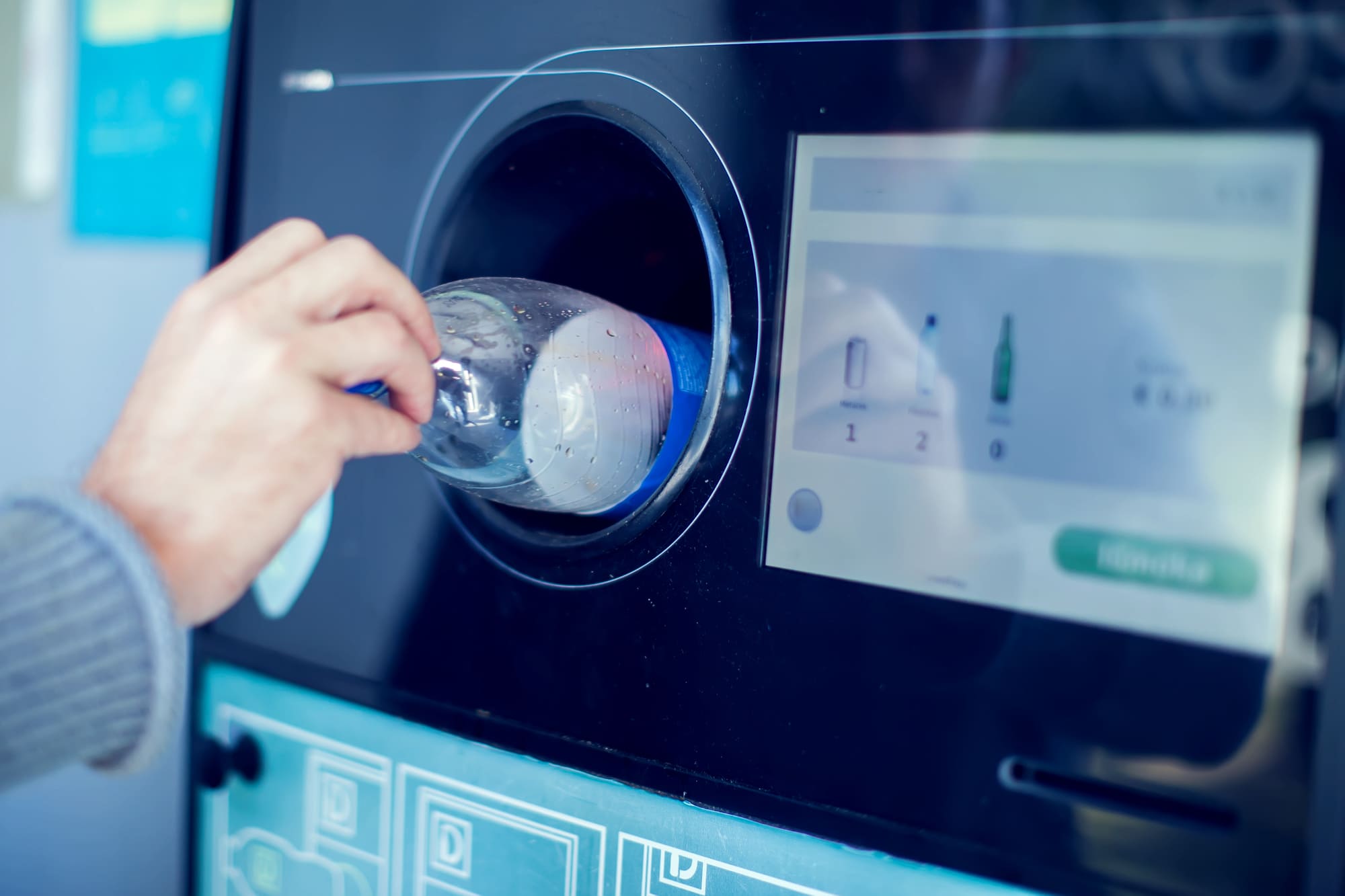
The organisation leading the UK’s new Deposit Return Scheme (DRS) has finally confirmed the deposit value that will be applied to eligible drinks containers.
The figure is 20p.
For every qualifying bottle or can purchased, consumers will pay an additional 20p and receive it back when the container is returned through the scheme.
On the face of it, that sounds reasonable. But it raises an important question:
Is 20p actually enough to change behaviour?
What Is the Deposit Return Scheme?
The Deposit Return Scheme is designed to increase the recovery of drinks containers by attaching a financial value to them.
The principle is simple:
- Buy a drink.
- Pay a deposit.
- Return the empty container.
- Get the deposit back.
Supporters argue that this will reduce litter, increase recycling rates and improve the quality of materials collected for reprocessing.
All of those objectives are worthwhile.
The question is whether 20p is the right incentive to achieve them.
What Is 20p Worth Today?
Twenty pence is not what it used to be.
For someone earning the National Living Wage, 20p represents less than a minute’s work.
You cannot buy a chocolate bar for 20p.
You cannot buy a bag of crisps for 20p.
In fact, there is very little you can buy for 20p at all.
And yet we are being told that this amount is sufficient to influence behaviour across an entire population.
That may prove to be true.
But it is still worth asking why 20p was chosen and whether a stronger incentive would have delivered stronger results.
If Deposits Change Behaviour, Why Stop at 20p?
The argument behind any deposit scheme is that financial incentives influence behaviour.
If that assumption is correct, then another question naturally follows:
Why is 20p the right number?
Why not 50p?
Why not £1?
After all, if every drinks container carried a £1 deposit:
- How many bottles would end up discarded in hedgerows?
- How many cans would be left in parks?
- How many containers would ever make it into residual waste bins?
The answer is probably “fewer”.
That does not automatically mean a £1 deposit would be practical or politically acceptable. There would be cost implications, cashflow implications and concerns about affordability.
But it does highlight a wider issue.
The debate is not really about recycling.
It is about incentives.
The Germany Comparison
Supporters of the UK’s Deposit Return Scheme often point to countries such as Germany, where return rates are significantly higher.
That comparison is useful, but it should be treated carefully.
Germany has been operating deposit systems for decades. Returning bottles and cans is not simply a financial decision. It has become a social norm.
People expect to do it.
Retailers expect to facilitate it.
The infrastructure is well established.
The UK does not yet have that culture.
The challenge here is not simply maintaining an existing behaviour. It is creating a new one.
That raises an important question:
Should a country introducing a deposit scheme for the first time rely on a modest incentive, or should it use the strongest practical incentive available to establish the habit?
Policy Reveals Priorities
The truth is that public policy often reveals what society genuinely believes.
If 20p proves sufficient to achieve the desired outcomes, excellent.
The scheme will have succeeded with minimal additional cost to consumers.
But if the objective is to change behaviour across an entire population, it is reasonable to ask why policymakers chose what appears to be the minimum effective incentive rather than the maximum practical one.
Perhaps 20p is enough.
Perhaps it is not.
Time will tell.
But if we are serious about recovering more waste containers, reducing litter and maximising resource value, then 20p is more than a number.
It is a statement about how much behavioural change we think that objective is worth.
And that makes it worth discussing.
About Gerald Price
Gerald Price is a business change consultant and interim managing director specialising in business turnarounds, operational improvement and commercial performance within the waste and recycling industry. Having worked with operators across the sector, he regularly writes about leadership, strategy, waste policy and the commercial realities facing UK waste businesses.
More articles and insights can be found at www.gpcp.co.uk and https://www.linkedin.com/in/geraldprice/