For private equity organisations pursuing a buy-and-build strategy in the waste and environment sector, the first acquisition should serve a much greater purpose than establishing a foothold in a new market. It provides the opportunity to develop, test and refine the operating model upon which the future group will be built.
The role of the first acquisition
When private equity organisations enter new markets, they don’t necessarily turn up with expert levels of understanding or a clear vision.
Some will have a very clear vision of what they want to build, how they intend to build it, and what the finished business should look like.
Others recognise an opportunity in a fragmented market, know there’s money to be made through consolidation, and move at pace to secure a foothold. The detail of how the businesses will work together comes later.
Now both approaches can work.
But whichever route they take, I see the first acquisition, often referred to as the platform acquisition, as having a much more important role to play than simply being the first company in the portfolio.
It’s the opportunity to trial and test what the group is going to become.
Developing a scalable operating model
That means understanding what already works, what doesn’t, and which elements of the business could form the foundations of something much bigger.
It means examining how the business is managed, how decisions are made, how performance is measured, and whether the systems and processes in place could support the business you’re planning to build, rather than simply the one you’ve just bought.
Amongst other things, I’d want to establish:
- How the group will be structured, led and managed.
- Which functions should be centralised and which should remain local.
- How commercial and operational performance will be measured.
- Which systems, processes and working practices can be replicated.
- How subsequent acquisitions will be integrated without unnecessarily disrupting their performance.
These aren’t decisions that should have to be made for the first time when several businesses are already under common ownership.
Challenging established industry practices
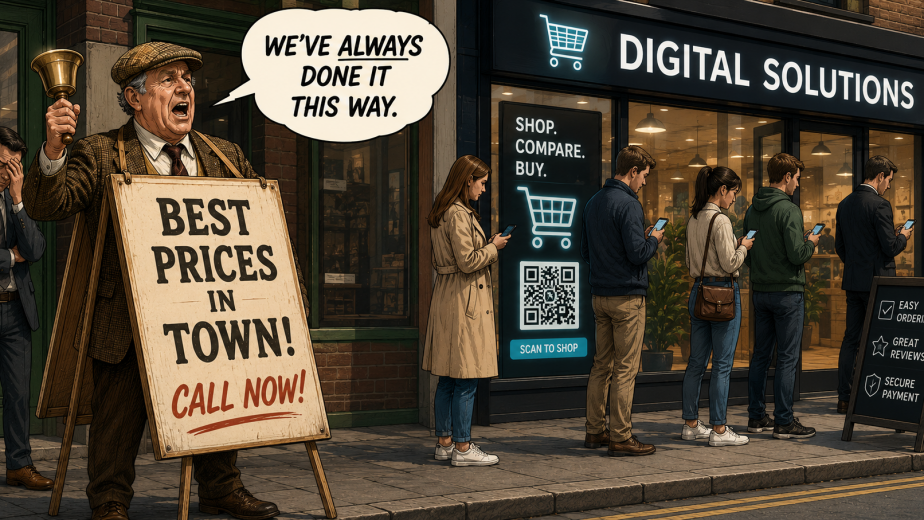
It also means being prepared to challenge the operational assumptions you’ve inherited, rather than allowing them to dictate the strategy itself.
Why does the business, or even the entire industry it’s in, do certain things in certain ways? And is there an opportunity to do things differently and steal a march on the competition?
The UK waste management and recycling industry, in which I have considerable experience, provides a good example.
It’s a fragmented market offering numerous opportunities for consolidation. But acquiring several waste management businesses doesn’t necessarily address the commercial and operational challenges facing those individual businesses.
If there are better ways of pricing services, deploying vehicles, processing materials, managing labour or generating sales, surely the time to develop and test those approaches is before acquiring several more businesses?
Otherwise, the investment strategy risks simply creating a larger version of the businesses it acquires, rather than something demonstrably better.
Because size alone doesn’t guarantee the expected returns.
Intelligent replication and operational value creation
That’s why I’d want to use that first acquisition to trial new approaches, establish what works, discover what doesn’t, and make the inevitable mistakes while they’re still relatively inexpensive.
Rather than acquire four more businesses and then discover that every ‘new way of working’ you planned is failing, with five times the pain.
Because the key to successful growth through acquisition is intelligent replication.
The ability to begin implementing a tried and tested operating model from the moment the ink is dry, rather than having to develop one afresh with every acquisition.
That doesn’t mean imposing identical working practices on every business, regardless of its individual circumstances. It means understanding which elements of the operating model create value, which are transferable, and where local flexibility is necessary.
Of course, every acquisition will bring its own people, customers, facilities and challenges. But the first is there to establish a proven way of leading, managing and improving those that follow.
Is the business ready to scale?
The ability to acquire businesses and the organisational capability to integrate, manage and improve them are two very different things.
Developing that capability should be a fundamental part of any private equity buy-and-build strategy, not something that emerges as a consequence of it.
Because the real question, before moving on to acquisition number two, ought to be:
Are we scaling something proven, or enlarging something we still don’t understand?
About Gerald Price
Gerald Price is a business change consultant and interim managing director specialising in business turnarounds, operational improvement and commercial performance, especially within the waste and recycling industry.
He provides interim, fractional and advisory support to business owners, investors and management teams seeking to improve performance, manage change and build commercially stronger businesses.
Having worked with operators across the sector, he regularly writes about leadership, strategy, waste policy and the commercial realities facing UK waste businesses.
More articles and insights can be found at gpcp.co.uk and https://www.linkedin.com/in/geraldprice/